

If you’re new here:
AI Grid Report explores how artificial intelligence is reshaping global energy systems.
Most coverage of AI focuses on models, startups, and software.
But the expansion of AI infrastructure depends on something far more physical:
electricity.
Training models, running inference, and operating hyperscale data centers all require enormous power supply and reliable grid infrastructure.
This publication examines the intersection of:
AI infrastructure
electricity demand
power markets
grid expansion
infrastructure investment
If these topics interest you, consider subscribing.
Now let’s look at the problem emerging at the center of the AI boom.
The Hidden Constraint Behind AI
Artificial intelligence is widely described as a computing revolution.
But every computation ultimately runs on electricity.
And the scale of power required by modern AI systems is growing at a pace that few energy systems were designed to support.
Consider a few numbers:
A single hyperscale data center can consume 100–500 megawatts of electricity.
The largest AI campuses currently planned may require 1 gigawatt or more of continuous power.
That is roughly equivalent to the electricity consumption of 750,000–1,000,000 homes.
Multiply that by dozens of facilities being planned across the United States, Europe, and Asia.
The result is a surge in electricity demand that is beginning to challenge existing grid infrastructure.
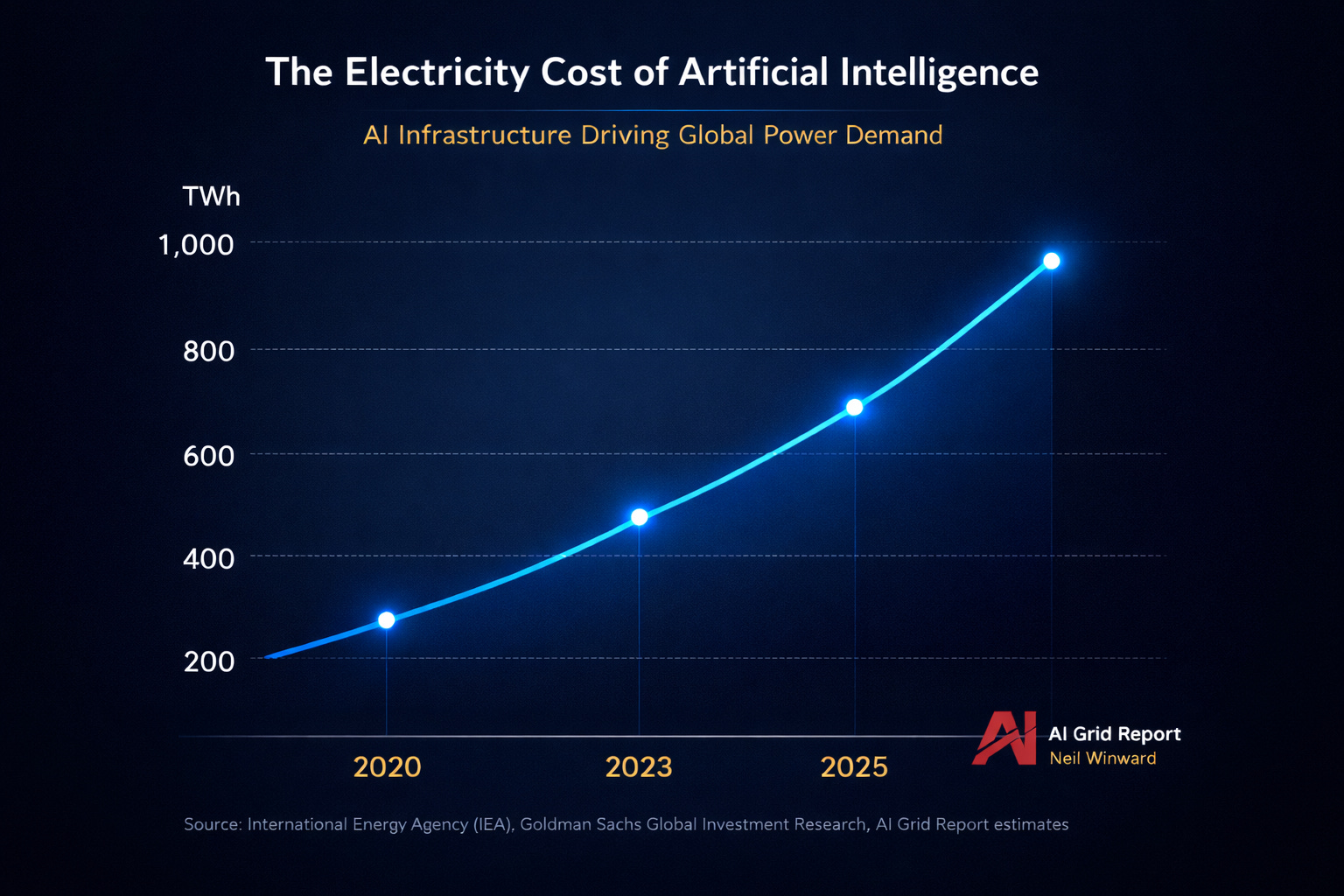
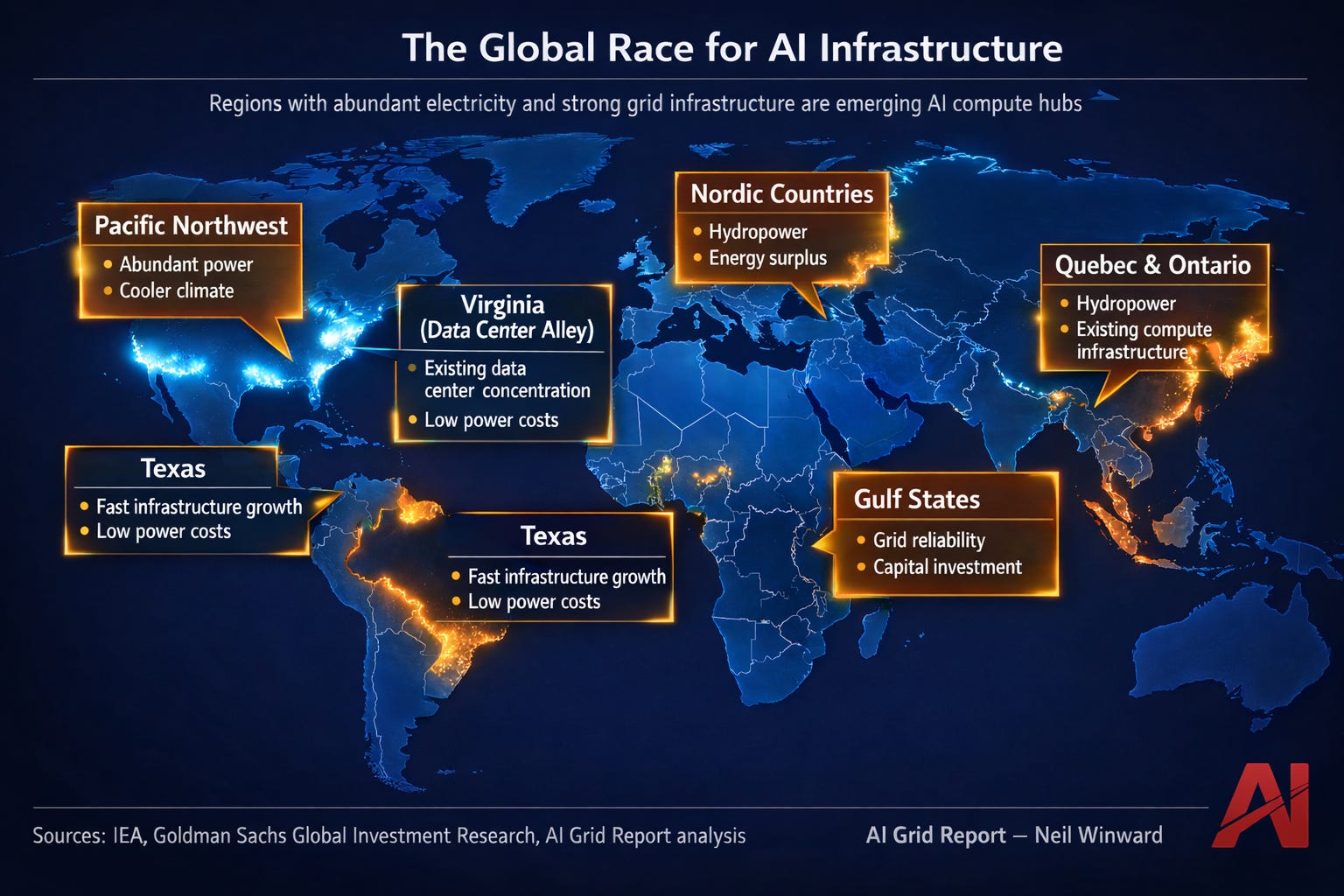
Figure 1 — The global race to build AI infrastructure is accelerating as governments and technology companies compete for compute capacity.
AI Electricity Demand Is Exploding
Several recent projections illustrate the scale of the coming demand.
According to the International Energy Agency, global data center electricity consumption could more than double by the end of the decade.
Key estimates include:
Data centers currently consume roughly 2–3% of global electricity.
AI workloads could push that number significantly higher by 2030.
In the United States alone, data center electricity demand could reach 9–12% of total power consumption within the decade.
Much of this growth is driven by the rapid expansion of AI training clusters and inference infrastructure.
Training a large model can require tens of thousands of GPUs operating simultaneously for weeks.
But inference — running the model for users — creates the long-term electricity demand.
And inference must run continuously.
The Grid Was Not Designed for AI
Electric power systems expand slowly.
Building new infrastructure requires:
multi-year permitting processes
transmission construction
generation development
regulatory approval
Transmission lines alone can take 10–15 years to permit and build.
Meanwhile, the AI industry is expanding infrastructure on a much faster timeline.
This mismatch is already creating pressure.
Grid operators across several regions have reported:
growing interconnection queues
delays connecting new data centers
local power shortages in high-demand areas
In some cases, utilities are warning that new data centers may need to wait years before sufficient electricity capacity becomes available.
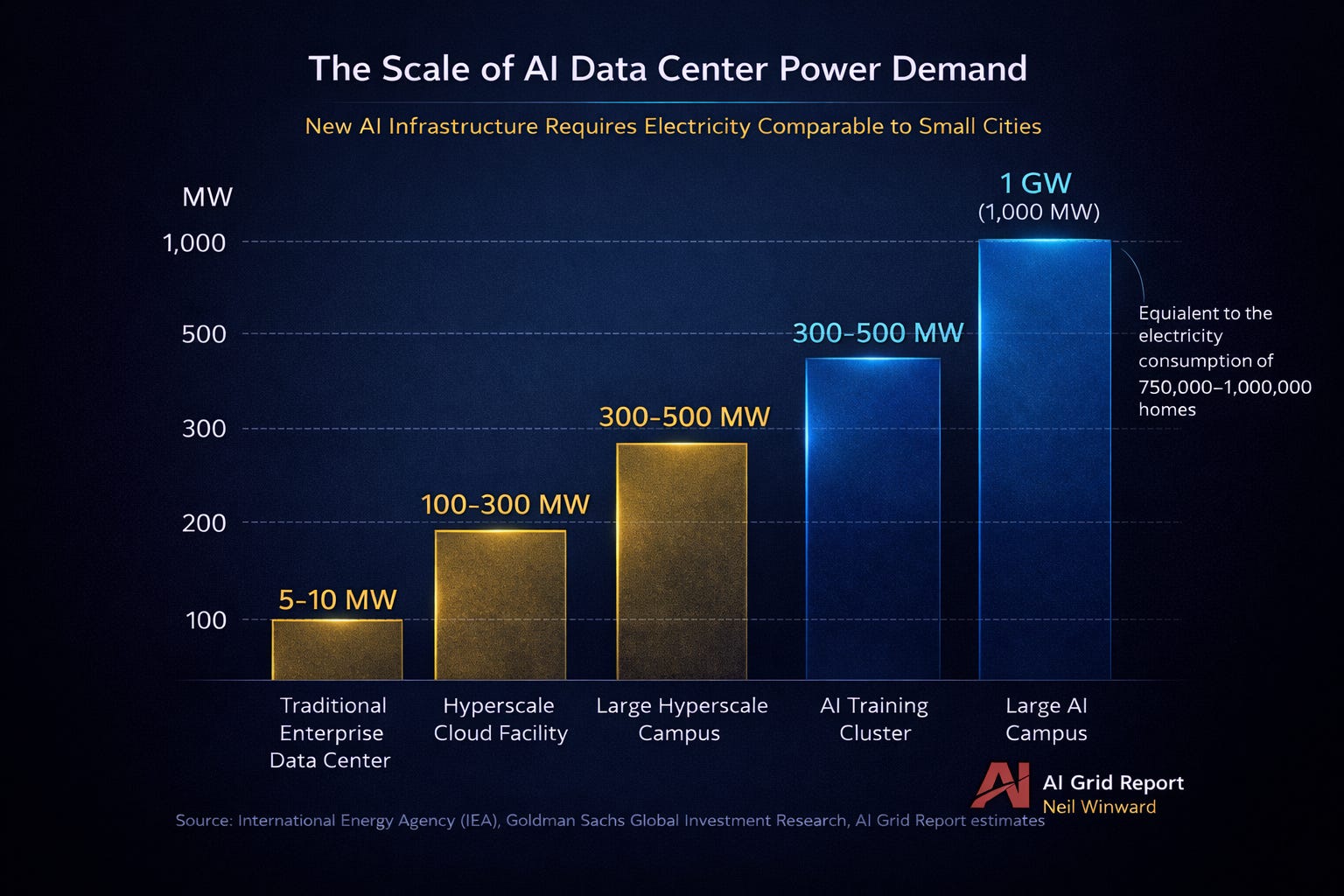
Figure 2 — Global Data Center Electricity Demand Projections
The Next Bottleneck
For much of the past two years, the main constraint on AI development was chips.
GPUs became the scarce resource.
But the next constraint may be more fundamental.
Even with unlimited computing hardware, AI infrastructure still requires:
reliable electricity supply
grid capacity
cooling systems
long-term power contracts
In other words:
AI infrastructure is becoming tightly linked to the energy system.
And that means electricity markets, utilities, and infrastructure investors are moving toward the center of the AI economy.
The Bigger Shift
For decades, the technology industry largely treated energy infrastructure as a background condition.
Power was assumed to be available.
The rise of large-scale AI is changing that assumption.
Electricity is becoming a strategic resource for the digital economy.
The companies and regions capable of securing large, reliable energy supply may gain a significant advantage in building the next generation of AI infrastructure.
Which leads to the central question explored in the next article:
Where will the next wave of AI data centers actually be built?
What’s Next
If you’re interested in the intersection of:
artificial intelligence
electricity infrastructure
energy geopolitics
and long-term investment trends
consider subscribing to AI Grid Report.
This publication explores how the global power system is being reshaped by the rise of artificial intelligence.
New articles are published regularly as we examine the infrastructure behind the AI economy.