

See what the headline megawatts miss.
Subscribe to AI Grid Report for independent analysis of the infrastructure, policy and investment risks behind the AI buildout.
For the last two years, the AI infrastructure conversation has mostly been about whether the industry could build fast enough.
Chips, transformers, turbines, transmission and electricity have all been in short supply. Those constraints are still real. Data-center electricity demand is still rising, and Big Tech is still committing enormous amounts of capital to the buildout.
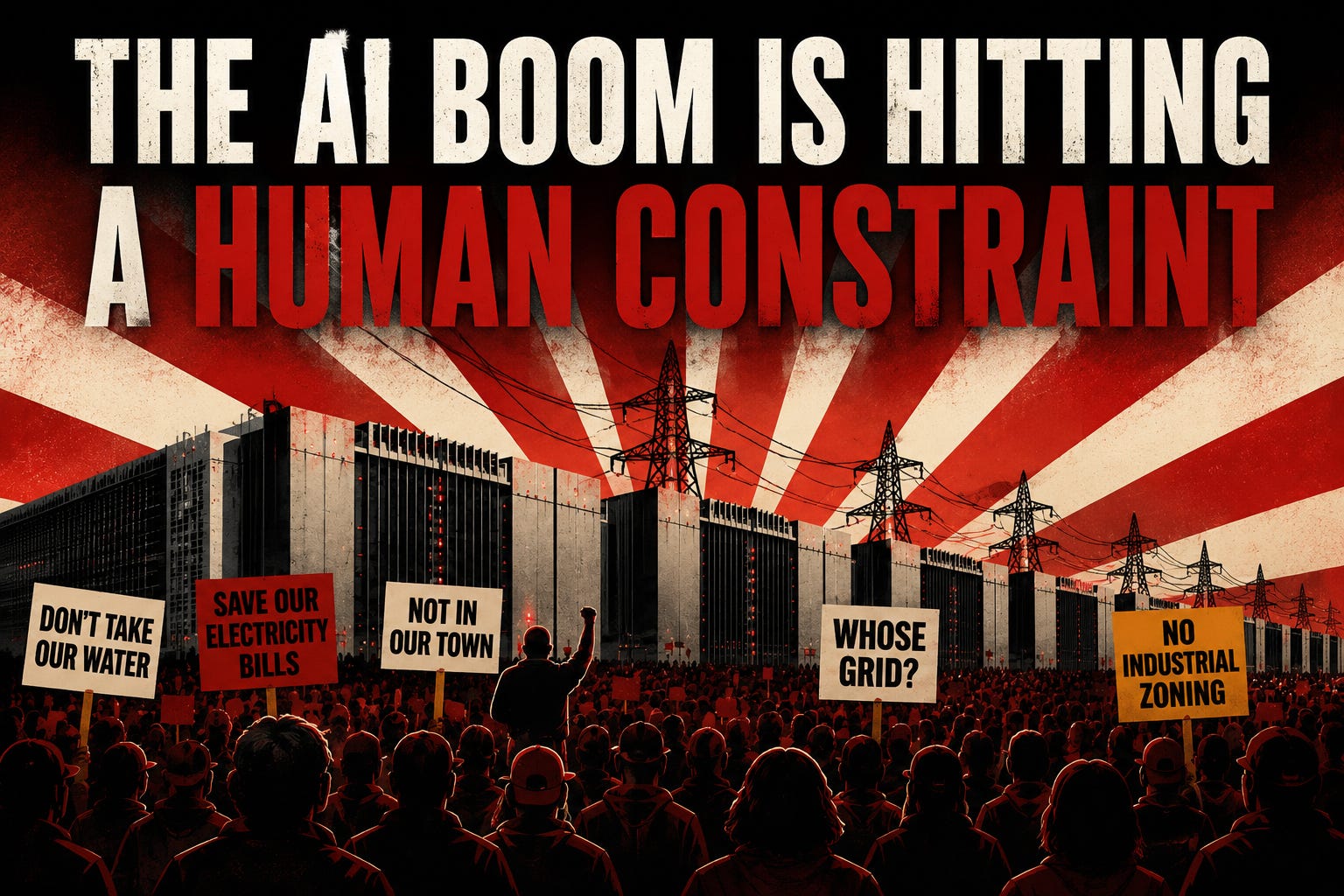
What is changing is how many people now believe they have a stake in where that infrastructure goes.
A data center can mean higher electricity demand, new substations, water use, tax incentives, noise, transmission lines and hundreds or thousands of acres of industrial development. That brings residents, local officials, state regulators, national politicians and utility commissions into decisions that used to look mostly like technical or commercial ones.
Companies are part of that equation too. Some are revisiting capacity they reserved when the race to secure power and land was moving faster than anyone’s ability to forecast how much they would ultimately need.
The result is a more complicated buildout.
Capital is still flowing. Demand is still growing. But projects increasingly have to survive political scrutiny, community opposition, cost allocation, permitting and changing corporate assumptions before they ever reach construction.
The next constraint on AI infrastructure may be the number of people who still have to say yes.
